UP Board Solutions for Class 8 Social Science
सामाजिक एवं राजनीतिक जीवन - 7. हाशियाकरण की समझ
प्रश्ष : हाशियाकरण क्या है ?
उत्तर : हाशियाकरण एक सामाजिक प्रक्रिया है जिसमें समाज के कुछ विशेष समूहों (जैसे आर्थिक रूप से कमज़ोर, धार्मिक अल्पसंख्यक, या कुछ जातियों) को मुख्यधारा के सामाजिक, आर्थिक, राजनीतिक और सांस्कृतिक जीवन से दूर कर दिया जाता है। इसके कारण ये समूह विकास के अवसरों, संसाधनों और निर्णय लेने की प्रक्रिया से वंचित रह जाते हैं और समाज के 'किनारे' या 'हाशिये' पर धकेल दिए जाते हैं।
Question: What is marginalization?
Answer: Marginalization is a social process where specific groups in society (like economically weaker sections, religious minorities, or certain castes) are pushed away from the mainstream of social, economic, political, and cultural life. This results in their deprivation from development opportunities, resources, and decision-making processes, forcing them to live on the 'margins' or edges of society.
प्रश्ष : समाज के उन तीन समूहों का नाम बताइए जो हाशियाकरण के शिकार हुए हैं ?
उत्तर : भारतीय समाज में हाशियाकरण का शिकार हुए तीन प्रमुख समूह हैं:
- आदिवासी (Adivasis): देश के मूल निवासी जो जंगलों और प्रकृति पर निर्भर रहते आए हैं।
- दलित (Dalits): जिन्हें ऐतिहासिक रूप से अस्पृश्य माना गया और जातिगत भेदभाव का सामना करना पड़ता है।
- मुसलमान (Muslims): एक धार्मिक अल्पसंख्यक समुदाय जो अक्सर सामाजिक-आर्थिक पिछड़ेपन और पूर्वाग्रह का शिकार होता है।
Question: Name the three groups of the society who are victims of marginalization?
Answer: The three major groups in Indian society that have been victims of marginalization are:
- Adivasis (Tribals): The indigenous people of the country who have traditionally depended on forests and nature.
- Dalits: Historically considered 'untouchables' and face caste-based discrimination.
- Muslims: A religious minority community that often faces socio-economic backwardness and prejudice.
प्रश्ष : हाशियाकरण से निपटने के लिए सरकार क्या करती है ?
उत्तर : हाशियाकरण से निपटने के लिए सरकार निम्नलिखित कदम उठाती है:
- संवैधानिक संरक्षण: संविधान में समानता का अधिकार, शोषण के विरुद्ध अधिकार और अल्पसंख्यकों के हितों की रक्षा जैसे प्रावधान किए गए हैं।
- विशेष कानून बनाना: अस्पृश्यता निवारण अधिनियम, एससी/एसटी (अत्याचार निवारण) अधिनियम जैसे कानून बनाए गए हैं।
- सकारात्मक कार्यवाही (आरक्षण): शिक्षा, सरकारी नौकरियों और विधायिका में अनुसूचित जाति, जनजाति और अन्य पिछड़े वर्गों के लिए आरक्षण की व्यवस्था।
- कल्याणकारी योजनाएँ: इन समुदायों के शैक्षिक, आर्थिक और सामाजिक उत्थान के लिए विशेष योजनाएँ (जैसे छात्रवृत्ति, आवास, रोज़गार कार्यक्रम) चलाई जाती हैं।
- विशेष आयोग गठित करना: राष्ट्रीय अनुसूचित जाति आयोग, राष्ट्रीय अनुसूचित जनजाति आयोग जैसे आयोग इन समुदायों के अधिकारों की रक्षा और शिकायत निवारण के लिए काम करते हैं।
Question: What does the government do to confront with marginalization?
Answer: To confront marginalization, the government takes several steps:
- Constitutional Safeguards: Provisions like the Right to Equality, Right against Exploitation, and protection of minority interests are enshrined in the Constitution.
- Enacting Special Laws: Laws like the Prevention of Atrocities Act against SC/ST communities are made.
- Positive Action (Reservation): Reservation policies in education, government jobs, and legislatures for Scheduled Castes, Scheduled Tribes, and Other Backward Classes.
- Welfare Schemes: Special schemes for scholarships, housing, and employment generation are launched for the upliftment of these communities.
- Forming Commissions: Commissions like the National Commission for SCs and STs work to protect the rights of these communities and address their grievances.
प्रश्ष : हाशियाकरण के शिकार समुदायों की कया समसयाएँ है ?
उत्तर : हाशियाकृत समुदायों को निम्नलिखित समस्याओं का सामना करना पड़ता है:
- उनके साथ सामाजिक और आर्थिक भेदभाव होता है।
- उन्हें उनके पारंपरिक संसाधनों (जैसे जमीन, जंगल, जल) से वंचित कर दिया जाता है।
- उन्हें उचित मजदूरी नहीं मिलती और आर्थिक शोषण का शिकार होना पड़ता है।
- अपने अधिकारों और गरिमापूर्ण जीवन के लिए उन्हें लगातार संघर्ष करना पड़ता है।
- शिक्षा, स्वास्थ्य, रोज़गार जैसे सरकारी और सामाजिक अवसरों तक उनकी पहुँच सीमित होती है।
- उनकी सांस्कृतिक पहचान को खतरा रहता है और उन पर 'मुख्यधारा' में ढलने का दबाव बनाया जाता है।
Question: What are the problems of marginalized communities?
Answer : Marginalized communities face the following problems:
- They face social and economic discrimination.
- They are deprived of their traditional resources (like land, forests, water).
- They do not get fair wages and are victims of economic exploitation.
- They have to constantly struggle for their rights and a dignified life.
- They have limited access to government and social opportunities like education, healthcare, and employment.
- Their cultural identity is threatened, and they face pressure to assimilate into the 'mainstream'.
प्रश्ष : आदिवासी कौन लोग हैं ?
उत्तर : 'आदिवासी' शब्द का अर्थ है 'मूल निवासी'। ये वे स्वदेशी समुदाय हैं जो प्राचीन काल से भारत के विभिन्न भागों, विशेषकर वनों, पहाड़ों और दुर्गम इलाकों में रहते आए हैं। इनकी अपनी विशिष्ट भाषा, संस्कृति, रीति-रिवाज और सामाजिक व्यवस्था होती है। ये प्रकृति के साथ सामंजस्य में रहने वाले समुदाय हैं। भारत की कुल आबादी का लगभग 8 प्रतिशत हिस्सा आदिवासी हैं।
प्रश्न : आर्थिक रूप से आदिवासी क्षेत्रों का क्या महत्व है ?
उत्तर : आर्थिक दृष्टि से आदिवासी बहुल क्षेत्रों का बहुत अधिक महत्व है:
- देश के अधिकांश महत्वपूर्ण खनिज संसाधन (जैसे लोहा, ताँबा, कोयला, बॉक्साइट) और बड़े औद्योगिक एवं बाँध परियोजनाएँ इन्हीं इलाकों में स्थित हैं।
- ये क्षेत्र देश को खनिज पदार्थ और औद्योगिक कच्चा माल प्रदान करके राष्ट्रीय अर्थव्यवस्था में महत्वपूर्ण योगदान देते हैं।
- इन क्षेत्रों के वन उत्पाद (लकड़ी, गोंद, जड़ी-बूटियाँ) भी आर्थिक महत्व रखते हैं।
Question: What is the importance of financially Adivasis areas?
Answer: Tribal-dominated areas hold great economic importance:
- Most of the country's vital mineral resources (like iron, copper, coal, bauxite) and major industrial and dam projects are located in these areas.
- These areas contribute significantly to the national economy by providing minerals and industrial raw materials.
- Forest produce (timber, gum, herbs) from these regions also holds economic value.
प्रश्ष : भारत में कितने आदिवासी समूह हैं ?
उत्तर : भारत एक विविधतापूर्ण देश है और यहाँ 500 से अधिक विभिन्न आदिवासी समूह निवास करते हैं। इनमें से 75 समूहों को 'पारंपरिक रूप से असुरक्षित जनजातीय समूह' (PVTGs) के रूप में वर्गीकृत किया गया है।
Question: How many tribal groups are there in India?
Answer: India is a diverse country and is home to more than 500 distinct tribal groups. Among these, 75 groups are classified as 'Particularly Vulnerable Tribal Groups' (PVTGs).
प्रश्ष : भारत में प्रमुख आदिवासी क्षेत्र कहाँ-कहाँ हैं ?
उत्तर : भारत में आदिवासियों की बड़ी आबादी वाले प्रमुख क्षेत्र हैं:
- मध्य भारत: छत्तीसगढ़, झारखंड, मध्य प्रदेश, उड़ीसा
- पश्चिम भारत: गुजरात, महाराष्ट्र, राजस्थान
- दक्षिण भारत: आंध्र प्रदेश, तेलंगाना, तमिलनाडु, केरल, कर्नाटक
- पूर्वोत्तर भारत: असम, मेघालय, मणिपुर, मिजोरम, नागालैंड, त्रिपुरा, अरुणाचल प्रदेश
- उत्तरी भारत: हिमाचल प्रदेश, उत्तराखंड, जम्मू-कश्मीर के कुछ क्षेत्र
Question: Where are the major tribal areas in India?
Answer: The major regions in India with a large tribal population are:
- Central India: Chhattisgarh, Jharkhand, Madhya Pradesh, Odisha
- Western India: Gujarat, Maharashtra, Rajasthan
- Southern India: Andhra Pradesh, Telangana, Tamil Nadu, Kerala, Karnataka
- North-Eastern India: Assam, Meghalaya, Manipur, Mizoram, Nagaland, Tripura, Arunachal Pradesh
- Northern India: Some areas of Himachal Pradesh, Uttarakhand, Jammu & Kashmir
प्रश्ष : आदिवासी समूह की विशेषताएँ लिखिए |
उत्तर : आदिवासी समाजों की प्रमुख विशेषताएँ इस प्रकार हैं:
- उनके समाज में ऊँच-नीच या जातिगत भेदभाव बहुत कम या नहीं के बराबर होता है।
- ये समुदाय जाति-वर्ण पर आधारित समाजों या राजशाही से पूरी तरह अलग होते हैं। इनकी अपनी सामुदायिक शासन प्रणाली होती है।
- ये अक्सर प्रकृति, पूर्वजों और गाँव देवताओं की उपासना करते हैं। इनका धर्म प्रकृति से गहरा जुड़ाव रखता है।
- ये परंपरागत रूप से जंगलों या उनके निकट रहते हैं और अपनी आजीविका के लिए वन उत्पादों, शिकार, स्थानांतरित कृषि या छोटी खेती पर निर्भर रहे हैं।
- इनकी अपनी विशिष्ट भाषा, लोक कला, संगीत, नृत्य और पहनावा होता है।
Question: Write the characteristics of the tribal group.
Answer: The main characteristics of tribal societies are:
- There is very little or no hierarchy or caste-based discrimination within their society.
- These communities are completely distinct from caste-based societies or monarchies. They have their own community-based governance systems.
- They often worship nature, ancestors, and village deities. Their religion is deeply connected to nature.
- They traditionally live in or near forests and depend on forest produce, hunting, shifting cultivation, or small-scale farming for their livelihood.
- They have their own distinct language, folk art, music, dance, and attire.
प्रश्न : आदिवासी लोगों के प्रति हमारे बीच कौन-कौन सी गलत और प्रचलित छवियाँ हैं ?
उत्तर : आदिवासियों के बारे में समाज में फैली कुछ गलत और रूढ़िबद्ध छवियाँ (Stereotypes) इस प्रकार हैं:
- यह मान लेना कि आदिवासी पिछड़े, आदिम और विकास के विरोधी होते हैं, जबकि वे अपने तरीके से विकास चाहते हैं।
- स्कूली कार्यक्रमों, किताबों या फिल्मों में उन्हें हमेशा एक ही तरह के पहनावे और रीति-रिवाज में दिखाया जाता है, जो उनकी विविधता को नहीं दर्शाता।
- यह सोचना कि उनका जीवन बहुत रोमांचक और सरल है, जबकि वे भी आधुनिक चुनौतियों और जटिलताओं का सामना करते हैं।
- यह मान लेना कि वे बदलाव या नई तकनीक को अपनाना नहीं चाहते, जबकि वे समय के साथ बदल रहे हैं।
Question: What are the wrong and popular images (stereotyping) of the tribal people among us?
Answer: Some common wrong and stereotypical images about tribal people prevalent in our society are:
- Assuming that tribals are backward, primitive, and resistant to development, whereas they desire development in their own way.
- Portraying them in a single, fixed manner of dress and customs in school events, books, or movies, which does not reflect their diversity.
- Thinking that their life is very exotic and simple, while they also face modern challenges and complexities.
- Believing that they are unwilling to change or adopt new technology, whereas they are evolving with time.
प्रश्ष : औपनिवेशिक शासन से पहले आदिवासी समुदाय के जीवन का वर्णन करों |
उत्तर : औपनिवेशिक शासन से पहले आदिवासी समुदाय का जीवन इस प्रकार था:
- वे मुख्य रूप से शिकार, भोजन संग्रहण, मछली पकड़ना और स्थानांतरित कृषि (झूम खेती) पर निर्भर थे। कुछ समुदाय एक स्थान पर बसकर खेती भी करते थे।
- उनका जंगलों के साथ गहरा और सामंजस्यपूर्ण संबंध था। वे जंगलों के विशेषज्ञ थे और उन पर उनका पूर्ण नियंत्रण व अधिकार था।
- उनकी सामाजिक संरचना सरल और समतामूलक थी। निर्णय सामूहिक रूप से लिए जाते थे।
- वे स्वायत्त थे और बाहरी शासन से काफी हद तक मुक्त रहते थे। उनकी अपनी स्थानीय प्रशासनिक व्यवस्था थी।
- 19वीं सदी के अंत तक भारत का बहुत बड़ा हिस्सा जंगलों से आच्छादित था, जहाँ आदिवासी स्वतंत्रता से रहते और अपने संसाधनों का प्रबंधन करते थे।
Question: Describe the life of the tribal community before the colonial rule.
Answer: Before colonial rule, the life of tribal communities was as follows:
- They primarily depended on hunting, food gathering, fishing, and shifting cultivation (jhum). Some communities also practiced settled agriculture.
- They had a deep and harmonious relationship with forests. They were experts on forests and had complete control and rights over them.
- Their social structure was simple and egalitarian. Decisions were made collectively.
- They were largely autonomous and free from external rule. They had their own local governance systems.
- Until the end of the 19th century, a large part of India was covered with forests where tribals lived freely and managed their resources.
प्रश्ष : आदिवासियों की जमीनें और जंगल छीन जाने से उनके सामने आजीविका के लेकर क्या समसस्याएँ हैं ?
उत्तर : जमीन और जंगल छिन जाने से आदिवासियों की आजीविका पर गंभीर संकट उत्पन्न हुआ है:
- वे भोजन और आजीविका के अपने पारंपरिक स्रोतों से वंचित हो गए हैं।
- अपने घर और संसाधन खोने के कारण बहुत से आदिवासी रोज़गार की तलाश में शहरों की ओर पलायन करने को मजबूर हैं।
- शहरों में उन्हें निर्माण स्थलों, छोटे कारखानों या घरेलू नौकरियों में बहुत कम मजदूरी पर काम करना पड़ता है, जहाँ उनका शोषण होता है।
- इससे वे गरीबी, कर्ज और असुरक्षा के चक्र में फंस जाते हैं। आँकड़े बताते हैं कि ग्रामीण क्षेत्रों में 45% और शहरी क्षेत्रों में 35% आदिवासी गरीबी रेखा से नीचे जीवन यापन करते हैं।
- इन परिस्थितियों के कारण कुपोषण, स्वास्थ्य समस्याएँ और निम्न साक्षरता दर जैसी चुनौतियाँ उत्पन्न होती हैं।
Question: What are the problems with livelihood in front of tribals due to snaching their forest and lands?
answer : The loss of land and forests has created a severe livelihood crisis for tribals:
- They have been deprived of their traditional sources of food and livelihood.
- Losing their homes and resources, many tribals are forced to migrate to cities in search of work.
- In cities, they have to work for very low wages at construction sites, small factories, or as domestic help, where they are often exploited.
- This traps them in a cycle of poverty, debt, and insecurity. Statistics show that 45% of tribals in rural areas and 35% in urban areas live below the poverty line.
- These conditions lead to challenges like malnutrition, health issues, and low literacy rates.
प्रश्न : 'एक दायरे में होने वाला विकास दुसरे दायरे में विनाश लाता है' आदिवासियों के सन्दर्भ में इस कथन की पुष्टि कीजिए |
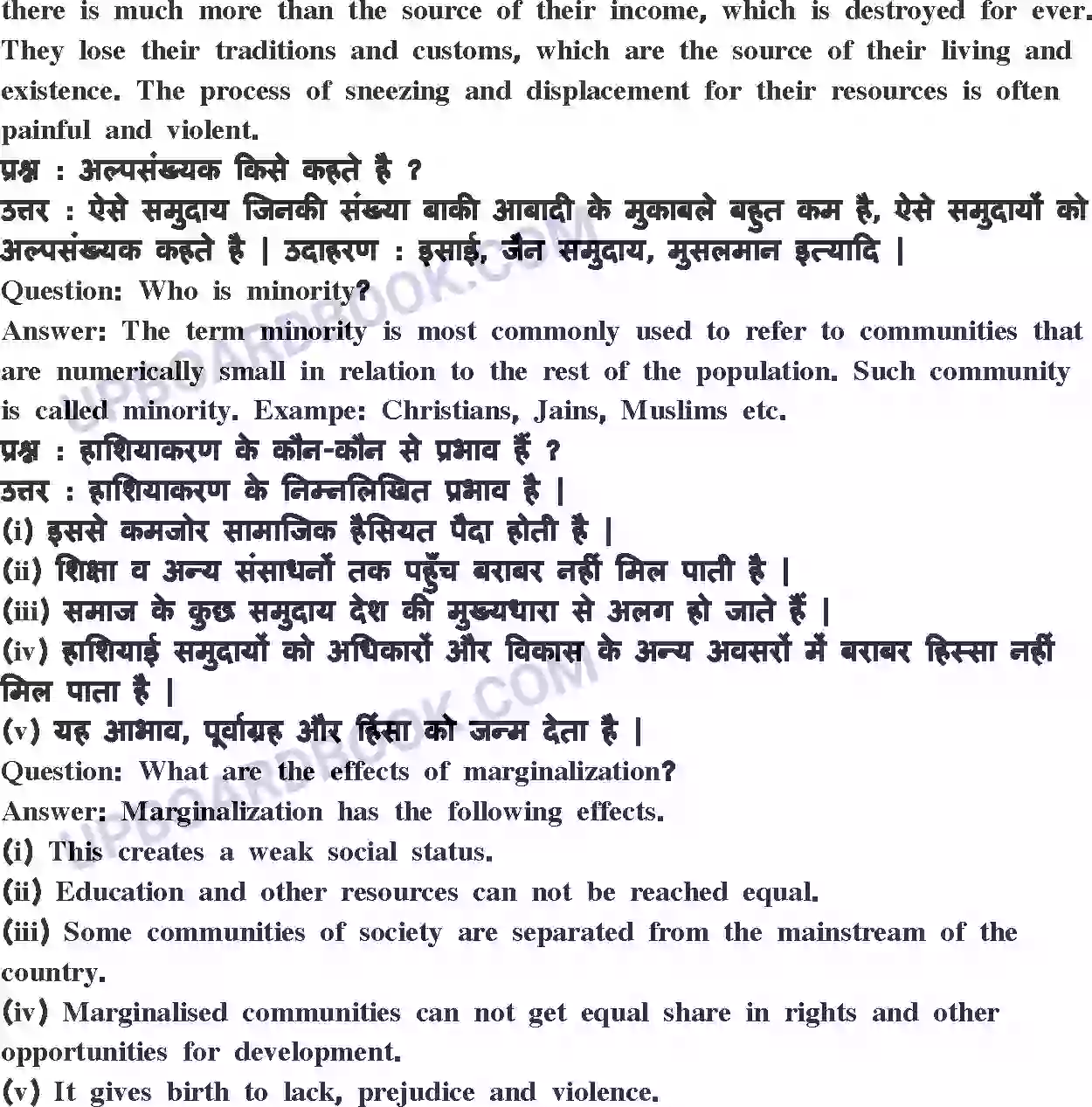
उत्तर : यह कथन आदिवासियों के संदर्भ में पूरी तरह सही है। बड़े बाँध, खदानें, सड़कें और उद्योग स्थापित करने जैसे 'विकास' के कार्य अक्सर आदिवासी इलाकों में होते हैं। इस विकास का एक पक्ष यह है कि यह राष्ट्र को बिजली, खनिज और आर्थिक लाभ देता है। लेकिन दूसरे पक्ष में, इसके लिए आदिवासियों को उनकी जमीन और जंगल से विस्थापित किया जाता है। इससे उनका सिर्फ आर्थिक आधार ही नहीं, बल्कि उनकी पूरी सामाजिक-सांस्कृतिक जड़ें टूट जाती हैं। उनकी परंपराएँ, रीति-रिवाज, पूजा स्थल सब नष्ट हो जाते हैं। यह विस्थापन अक्सर दर्दनाक और हिंसक होता है। इस प्रकार, एक तरफ़ जो औद्योगिक विकास होता है, वह दूसरी तरफ़ आदिवासी समुदाय के जीवन और संस्कृति के विनाश का कारण बन जाता है।
Question: Development in one sphere brings distruction in other sphere, confirm this statement in respect of tribals,
Answer: This statement is entirely true in the context of tribals. 'Development' works like large dams, mines, roads, and industries are often set up in tribal areas. One side of this development is that it provides electricity, minerals, and economic benefits to the nation. But on the other side, it displaces tribals from their land and forests. This destroys not just their economic base but their entire socio-cultural roots. Their traditions, customs, and places of worship are all destroyed. This displacement is often painful and violent. Thus, the industrial development that happens on one hand becomes the cause of destruction for the life and culture of tribal communities on the other.
प्रश्न : अल्पसंख्यक किसे कहते है ?
उत्तर : अल्पसंख्यक वे समुदाय हैं जिनकी जनसंख्या देश या किसी राज्य की कुल आबादी की तुलना में कम होती है। केवल संख्या कम होना ही काफी नहीं है; इन समुदायों को सामाजिक, आर्थिक या राजनीतिक रूप से कमजोर भी होना चाहिए और उनकी एक विशिष्ट धार्मिक, भाषाई या सांस्कृत